
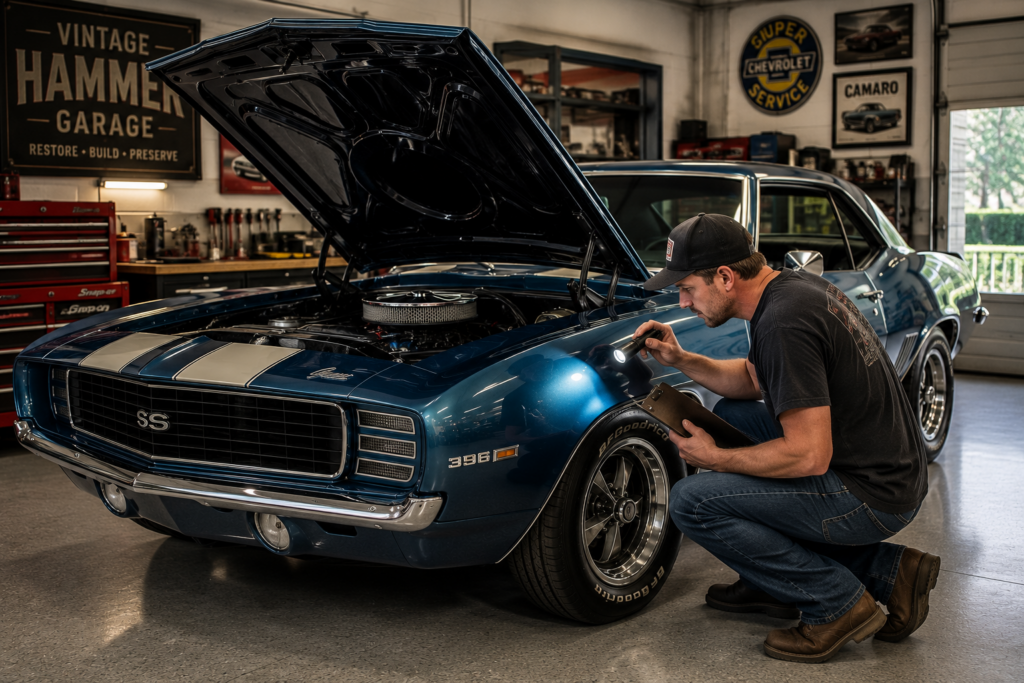
Buying a classic car can be exciting, but it can also be risky if you do not know what to inspect before making a decision. A beautiful paint job, polished chrome, or clean interior can hide expensive problems underneath. Rust, hidden body damage, missing parts, weak engines, poor wiring, and questionable paperwork can turn a dream project into a costly restoration mistake.
That is why every buyer needs a classic car inspection checklist before purchasing. Whether you are looking for a weekend cruiser, a full restoration project, or a collector-grade vehicle, a careful inspection helps you understand what you are really buying. It also gives you a better idea of future repair costs, restoration difficulty, and long-term value.
Before you commit to a vintage vehicle, take your time. Bring basic tools, inspect the car in good lighting, review the paperwork, and avoid rushing because of emotion. If you are new to restoration, it may also help to understand what goes into a full classic car restoration so you can better estimate what the vehicle may need after purchase.
Start With The Vehicle’s Overall Condition
The first step is to look at the car as a whole. Step back and view it from different angles. Check whether the car sits evenly, whether the body lines look straight, and whether the doors, hood, and trunk align properly. Uneven gaps can point to previous accident damage, poor repairs, or structural issues.
Look at the stance of the vehicle. If one corner sits lower than the others, there may be suspension problems, frame damage, weak springs, or uneven tire pressure. A car that looks good in photos may reveal problems when viewed in person, so never rely on online listings alone.
Quick Visual Inspection Points
- Check body panel alignment
- Look for uneven gaps around doors and hood
- Inspect the car from front, rear, and side angles
- Check whether the vehicle sits level
- Look for signs of poor previous repairs
- Compare the condition to the asking price
Inspect The Body Before Anything Else
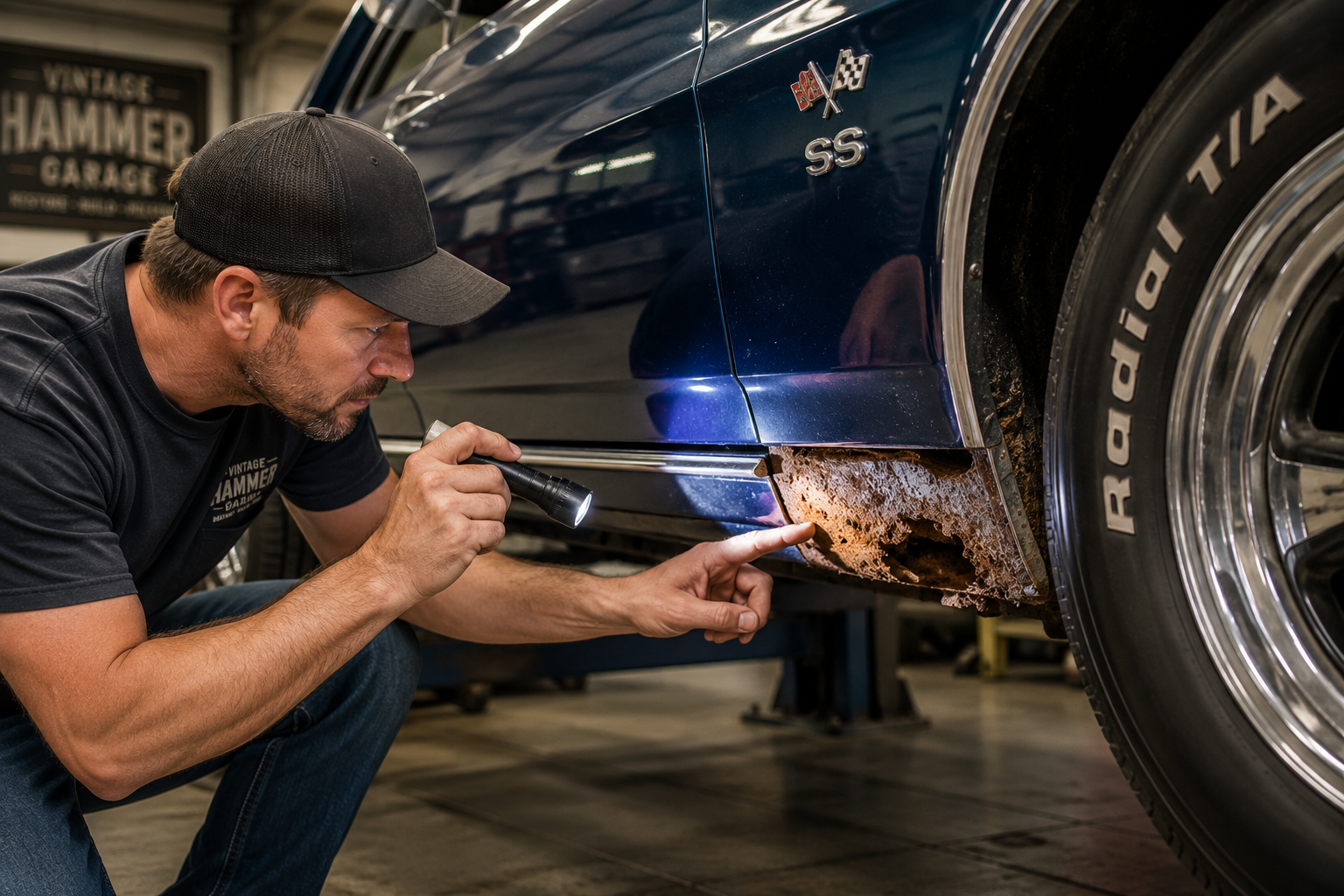
Body condition is one of the most important parts of any classic car inspection. Mechanical parts can often be repaired or replaced more easily than major structural rust. Bodywork can become expensive quickly, especially when rust has spread into floors, rockers, wheel arches, quarter panels, trunk pans, or frame rails.
Use a flashlight to inspect lower body areas. Check around the wheel wells, rocker panels, door bottoms, windshield edges, trunk floor, and under the carpet if possible. Bubbles under the paint may indicate rust underneath. Fresh paint can sometimes hide filler, dents, or corrosion, so inspect carefully.
A magnet can help detect heavy body filler in metal panels. If the magnet does not stick well in certain areas, there may be filler underneath. This does not always mean the car is bad, but it does mean you should ask more questions about previous repairs.
Common Rust Areas To Check
- Rocker panels
- Floor pans
- Trunk floor
- Wheel arches
- Door bottoms
- Frame rails
- Windshield and rear window channels
- Lower fenders
Rust repair can be one of the biggest expenses in a restoration project. If the car needs rare panels or hard-to-find trim, the project can become even more complicated. Before buying, review your parts options and consider reading about sourcing rare vintage parts so you know what may be involved.
Evaluate The Engine And Drivetrain
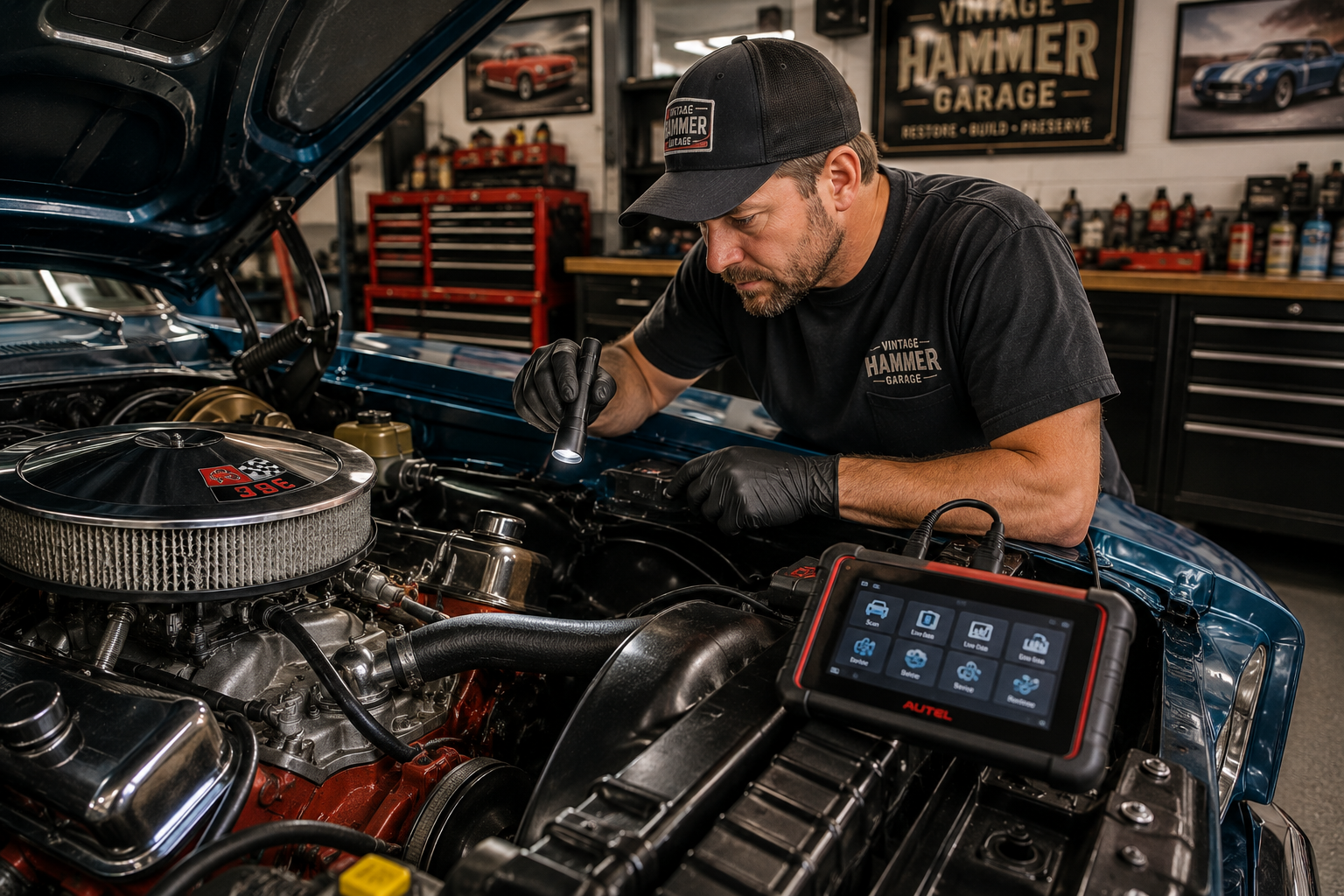
The engine can tell you a lot about how the car has been maintained. Start by checking for leaks, worn hoses, loose wires, damaged belts, oil residue, coolant stains, or fuel smells. A clean engine bay is nice, but do not let cleanliness distract you from mechanical issues.
Ask the seller to start the car when the engine is cold. A warm engine may hide starting problems, smoke, or rough idle issues. Listen for knocking, ticking, misfiring, or unusual vibration. Watch the exhaust. Blue smoke can suggest oil burning, white smoke may point to coolant issues, and black smoke can indicate fuel mixture problems.
If the car is safe to test drive, pay attention to acceleration, shifting, braking, steering, and temperature. The transmission should shift smoothly. The clutch should not slip. The engine should not overheat. The car should not pull strongly to one side under braking.
Engine And Drivetrain Checklist
- Check for oil leaks
- Inspect coolant condition
- Look for cracked hoses
- Check belts for wear
- Listen for knocking or ticking sounds
- Watch for exhaust smoke
- Test transmission shifting
- Check clutch operation if manual
- Look for overheating during a test drive
If you plan to handle some of the work yourself, having the right equipment matters. A quality inspection light, jack stands, compression tester, tire pressure gauge, and basic hand tools can help you evaluate a car more confidently. For a helpful starting point, review the top 10 must-have tools for restoring vintage cars.
Check The Suspension, Brakes, And Steering
A classic car may look great but still feel unsafe if the suspension, brakes, or steering are worn out. During your inspection, check for sagging springs, leaking shocks, loose steering parts, worn bushings, and uneven tire wear. These issues can affect ride quality, handling, and braking performance.
During a test drive, the car should track reasonably straight. If it wanders, shakes, pulls, or feels unstable, it may need steering or suspension work. Brakes should feel predictable. A soft pedal, grinding sound, pulling during braking, or vibration can point to problems.
Safety should always be part of the buying decision. You can also review general vehicle safety information from the National Highway Traffic Safety Administration when considering older vehicles and safe operation.
Suspension And Brake Red Flags
- Soft or sinking brake pedal
- Grinding or squealing brakes
- Vehicle pulls while braking
- Steering feels loose
- Car wanders on the road
- Uneven tire wear
- Leaking shocks
- Visible worn bushings
Review The Interior Carefully
The interior can reveal how well the car has been cared for. Look at the seats, dashboard, carpet, headliner, door panels, gauges, radio, switches, and trim pieces. Some interior wear is expected on older vehicles, but missing or damaged parts may be expensive to replace.
Check whether gauges work properly. Test lights, horn, wipers, heater, air conditioning if equipped, windows, locks, and seat adjustments. Electrical problems can be time-consuming to diagnose, especially on older vehicles with modified or aging wiring.
If the interior needs major work, it helps to understand the process involved in restoring classic car interiors. Upholstery, dashboard restoration, carpeting, and trim replacement can all add to the final project cost.
Review The Interior And Documentation
Paperwork is just as important as mechanical condition. A classic car with unclear ownership history, missing title, mismatched identification numbers, or incomplete records can create major problems. Always verify the title, VIN, registration status, and any restoration documents before buying.
Check the VIN plate and compare it with the title. On some classic cars, identification numbers may appear in multiple locations. Make sure they match and appear original. Be cautious if the VIN plate looks altered, removed, replaced, or damaged.
Documents To Review
- Vehicle title
- Registration records
- VIN information
- Restoration receipts
- Parts invoices
- Previous owner history
- Maintenance records
- Appraisal documents if available
For buyers interested in long-term ownership or collectability, documentation can affect confidence and value. Classic cars with strong records are often easier to evaluate. Sites like Hemmings and Hagerty can also help buyers research market trends, model history, and collector interest.
Understand The True Cost Of Restoration
The purchase price is only one part of the cost. A cheaper classic car may become expensive if it needs bodywork, paint, interior restoration, engine rebuilding, rare parts, wiring, brakes, suspension, and trim. Before buying, create a basic restoration estimate.
Separate the car’s needs into categories: must-fix safety items, mechanical repairs, cosmetic work, interior needs, missing parts, and optional upgrades. This helps you decide whether the car fits your budget and goals.
If you are considering a classic car as a long-term asset, read more about why vintage cars are considered investments. A smart purchase begins with knowing the difference between a promising project and an expensive mistake.
Research The Model Before Buying
Every classic car has its own strengths, weaknesses, and parts availability. Some models have strong aftermarket support, while others require rare parts or custom fabrication. Research the car’s production numbers, common rust areas, engine options, trim packages, and market demand.
Understanding the background of a vehicle can also make the inspection more meaningful. If you enjoy automotive history, this article on the history of iconic vintage cars can help you appreciate why certain models remain desirable among collectors.
You can also browse resources from the Antique Automobile Club of America or industry organizations like SEMA to learn more about restoration communities, specialty parts, and classic vehicle culture.
Create A Post-Purchase Plan
If the car passes your inspection and you decide to buy it, create a post-purchase plan before driving it regularly. Start with safety items such as brakes, tires, steering, lights, and fluids. Then move to reliability items such as cooling system, ignition, battery, and fuel delivery.
A preventive schedule can help keep the vehicle in good condition after purchase. Once the car is yours, follow a structured routine like this preventive maintenance schedule for classic cars to protect your investment and reduce surprise repairs.
Conclusion
Inspecting a classic car before buying is one of the most important steps in the ownership journey. A careful inspection helps you understand the car’s true condition, expected repair costs, and restoration potential. Look beyond shiny paint and focus on the body, rust, engine, drivetrain, suspension, brakes, interior, paperwork, and parts availability.
The best classic car purchases are made with patience, research, and a realistic budget. Whether you want a show-quality build, a weekend cruiser, or a full restoration project, a detailed inspection can help you avoid costly surprises and choose a vehicle that fits your goals.